Introduction
You’re scrolling through a comment section or chatting with friends, and suddenly someone says, “These replies are all bots” or “Stop acting like a bot.” At first, it might leave you confused—are they talking about robots? Fake accounts? Or something else entirely? Don’t worry, you’re not alone. Slang evolves fast online, and words like “bots” can have meanings that go beyond their literal definition. In this guide, we’ll break down exactly what “bots” means in slang, how people use it in everyday chats, and when it’s appropriate to use (or avoid). Let’s make sure you never feel lost seeing this term again.
What Does Bots Mean in Text?
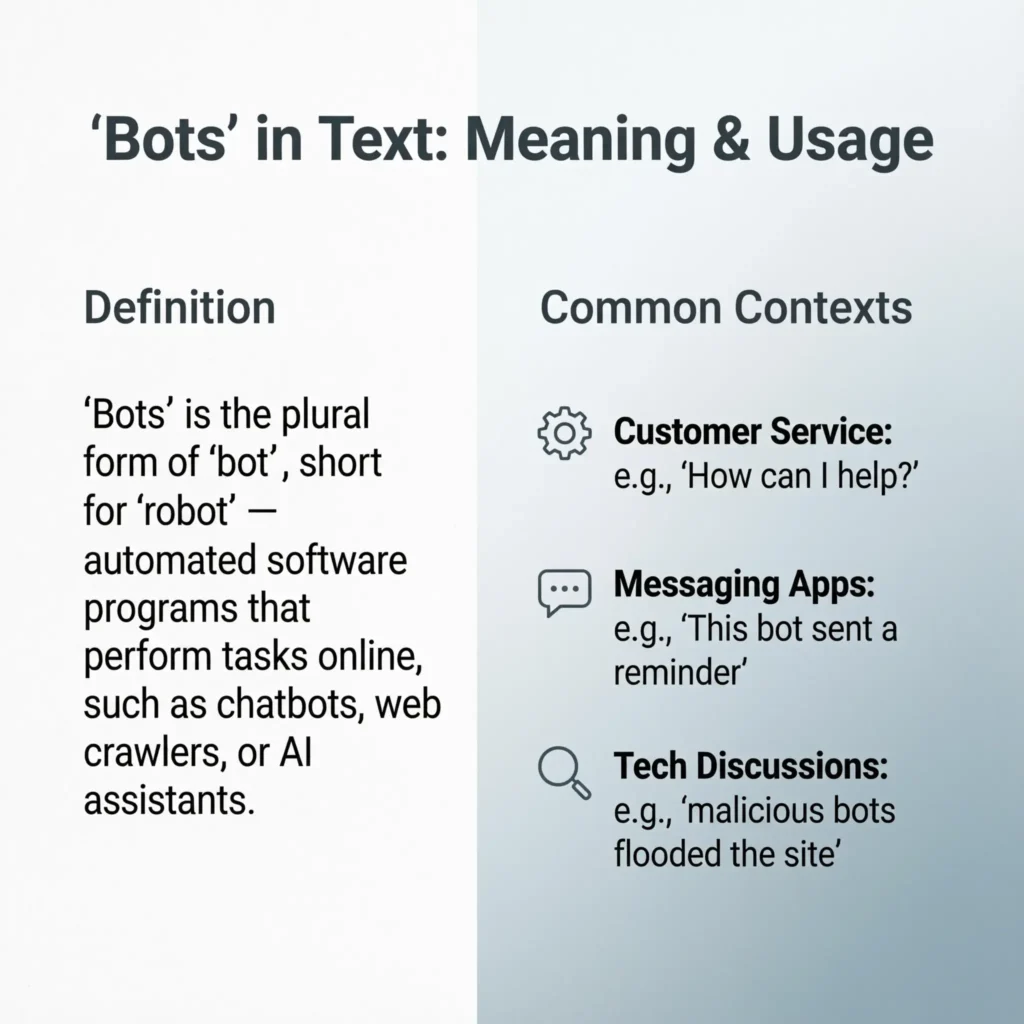
In slang, “bots” usually refers to fake, automated, or unoriginal people/accounts online.
Originally, a bot is short for “robot,” meaning a computer program designed to perform tasks automatically. But in everyday slang, the meaning has expanded.
Common slang meanings of “bots”:
- Fake accounts: Social media profiles that aren’t real people
- Automated responses: Accounts posting repetitive or spammy comments
- People acting robotic: Someone who seems unoriginal, predictable, or copy-pasting behavior
- Low-skill gamers: In gaming, “bots” can refer to weak or easy opponents
👉 In simple terms:
Calling someone or something “bots” often means it feels fake, scripted, or lacking originality.
Where Is Bots Used?
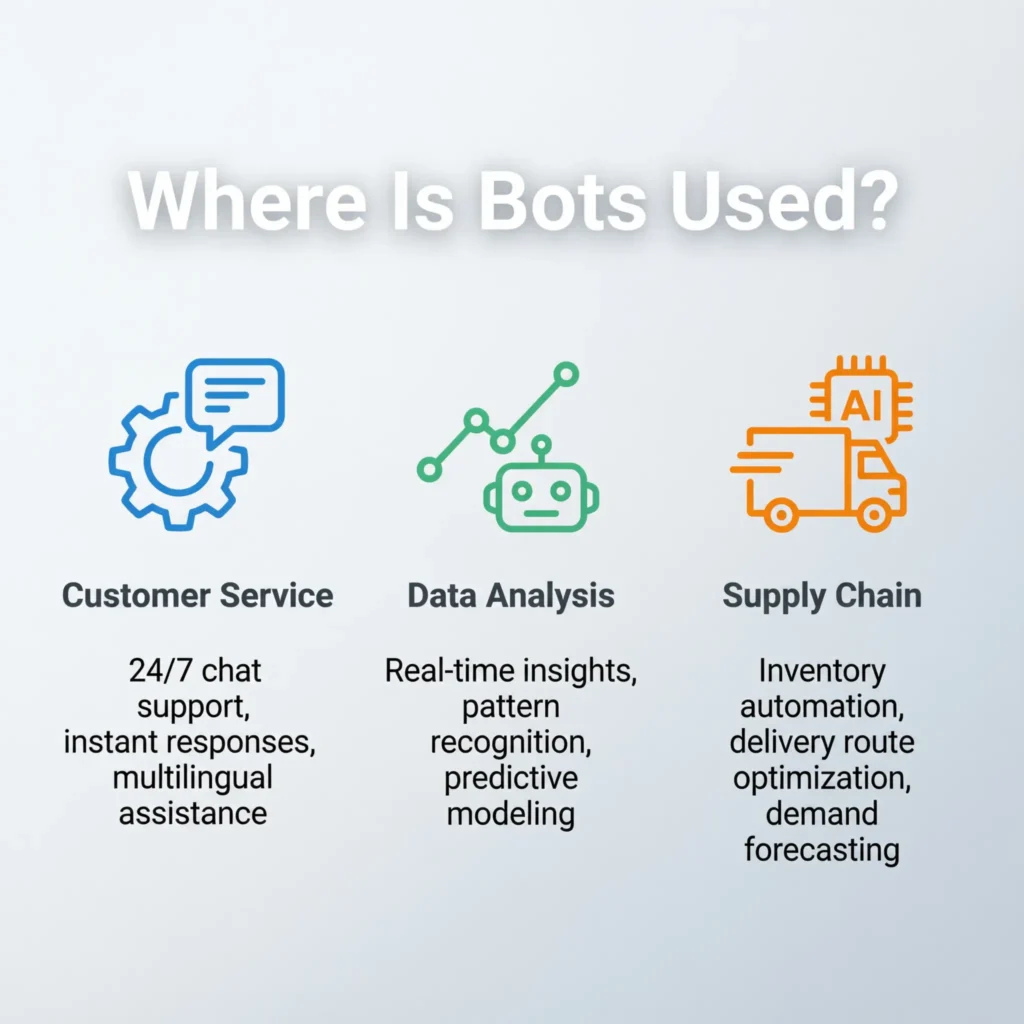
The slang term “bots” is widely used across many online platforms, especially where interaction and content sharing are common.
📱 Common platforms:
- TikTok – Used in comments when people suspect fake engagement
- Instagram – Often used for spam comments or fake followers
- Twitter/X – Frequently used in discussions about fake accounts or trends
- Gaming chats (Discord, in-game chat) – Refers to low-skill players or AI opponents
- Text messaging – Used casually among friends
👥 Who uses it?
- Teens and young adults
- Gamers
- Social media users
- Online communities discussing trends or authenticity
It’s a very casual, internet-native slang, so you’ll mostly see it in informal conversations rather than formal settings.
Examples of Bots in Conversation
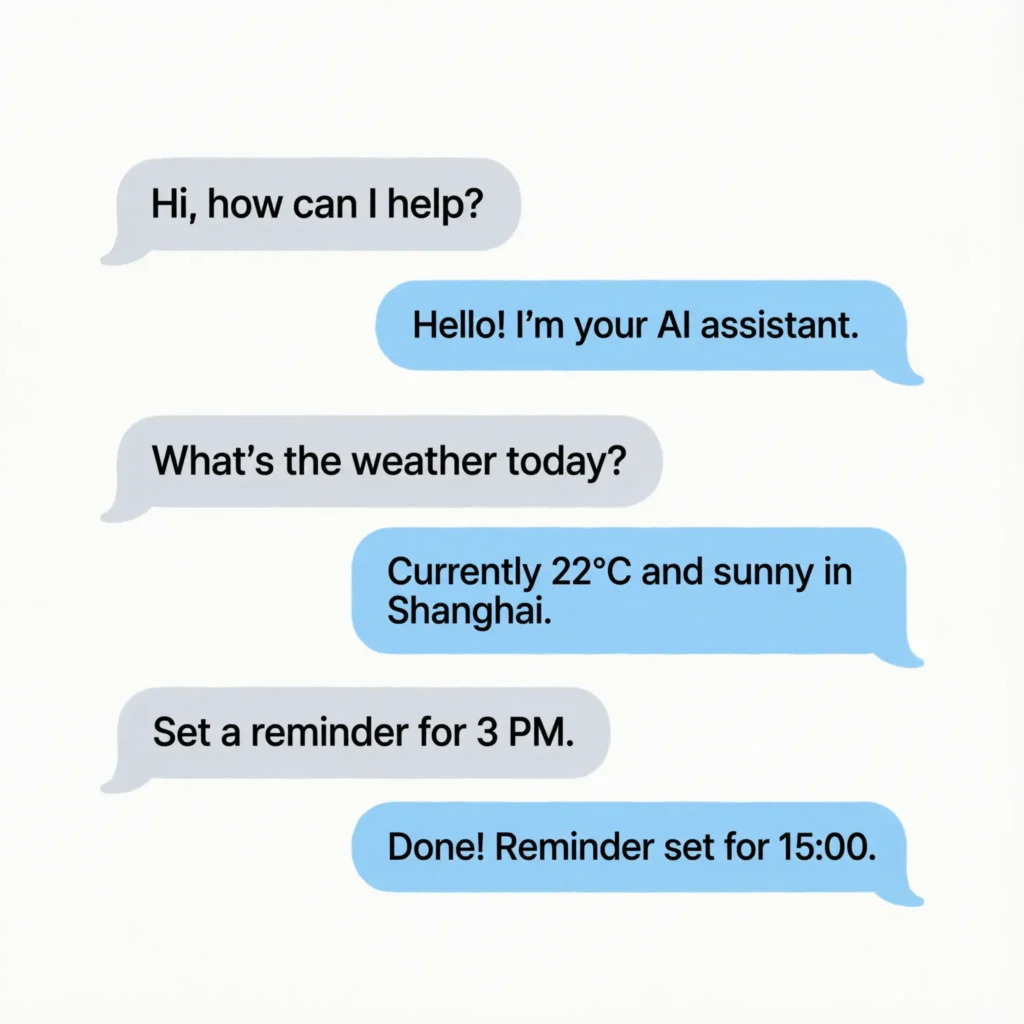
Here are some realistic chat-style examples to help you understand how “bots” is used:
- Friend 1: “Why are there so many comments saying the same thing?”
Friend 2: “Probably bots.” - User A: “This post got 10k likes in 5 minutes 😳”
User B: “Yeah, looks like bots to me.” - Gamer 1: “That team was so easy.”
Gamer 2: “Fr, they played like bots.” - Friend 1: “Why is he replying the same message to everyone?”
Friend 2: “He’s acting like a bot 😂” - User A: “All these followers came overnight??”
User B: “Bots for sure.” - Friend: “You didn’t even react, just said ‘ok’ again.”
You: “Lol I’m not a bot, just tired.” - Gamer chat: “Bro stop playing like a bot, push with the team!”
👉 As you can see, the tone can be playful, sarcastic, or even slightly insulting depending on context.
When to Use and When Not To Use Bots
✅ When to use “bots”:
- In casual conversations with friends
- While discussing social media trends or fake engagement
- In gaming chats to describe easy opponents
- When joking about someone being repetitive or predictable
❌ When NOT to use “bots”:
- In professional emails or workplace chats
- In formal writing or academic settings
- When speaking to someone who might not understand internet slang
- If you want to avoid sounding rude or dismissive
⚠️ Tone matters:
Calling someone a “bot” can sometimes sound:
- Playful (“You’re acting like a bot 😂”)
- Critical (“These are all bots”)
- Slightly insulting (“You play like a bot”)
So be careful—context and relationship matter.
Similar Slang Words or Alternatives
Here are some related slang terms you might see alongside “bots”:
- NPC (Non-Playable Character)
Refers to someone acting predictable or lacking originality - Fake
A simpler way to describe something not genuine - Spam
Repetitive or unwanted messages, often from bots - Clones
People copying trends or acting the same way - Sheeple
Slang for people blindly following others (can be harsh)
👉 These terms often overlap but have slightly different tones and meanings.
FAQs
What does “bots” mean from a girl?
It usually means the same thing—fake accounts, repetitive behavior, or something that doesn’t feel genuine. The meaning doesn’t change based on gender.
Is “bots” slang rude?
It can be. In some contexts, it’s harmless and funny. But calling someone a “bot” directly can come across as an insult, especially in gaming or arguments.
Can I use “bots” in professional chats?
No, it’s too casual. It’s best to avoid slang like “bots” in workplace or formal communication.
Does “bots” have any flirty meaning?
Not really. It’s not typically used in a romantic or flirty way. However, it could appear jokingly in casual flirting, like teasing someone.
Is “bots” still popular in 2026?
Yes! It remains widely used, especially on social media and in gaming communities. As long as online platforms exist, the term “bots” will likely stay relevant.
Conclusion
The slang term “bots” has evolved from its original meaning of automated programs to describe anything that feels fake, repetitive, or lacking originality online. If you’re talking about suspicious social media activity or joking with friends about robotic behavior, it’s a versatile and widely understood term in casual conversations.
Just remember: it’s best used in informal settings, and tone matters. Use it playfully with friends, but avoid it in serious or professional contexts. Once you understand the vibe, you’ll be able to use “bots” naturally—and spot them instantly in your chats.