Introduction
You’re scrolling through social media or chatting with a friend, and suddenly someone says, “I don’t understand this lingo.” You pause for a second—lingo? Isn’t that just another word for language? Or is it something more specific in online slang? If you’ve ever felt confused about what “lingo” really means in casual conversations, you’re not alone. This simple word pops up everywhere—from TikTok comments to texting—and it can carry slightly different meanings depending on the context. In this guide, we’ll break down exactly what “lingo” means in slang, how people use it, and how you can confidently use it too.
What Does Lingo Mean in Text?
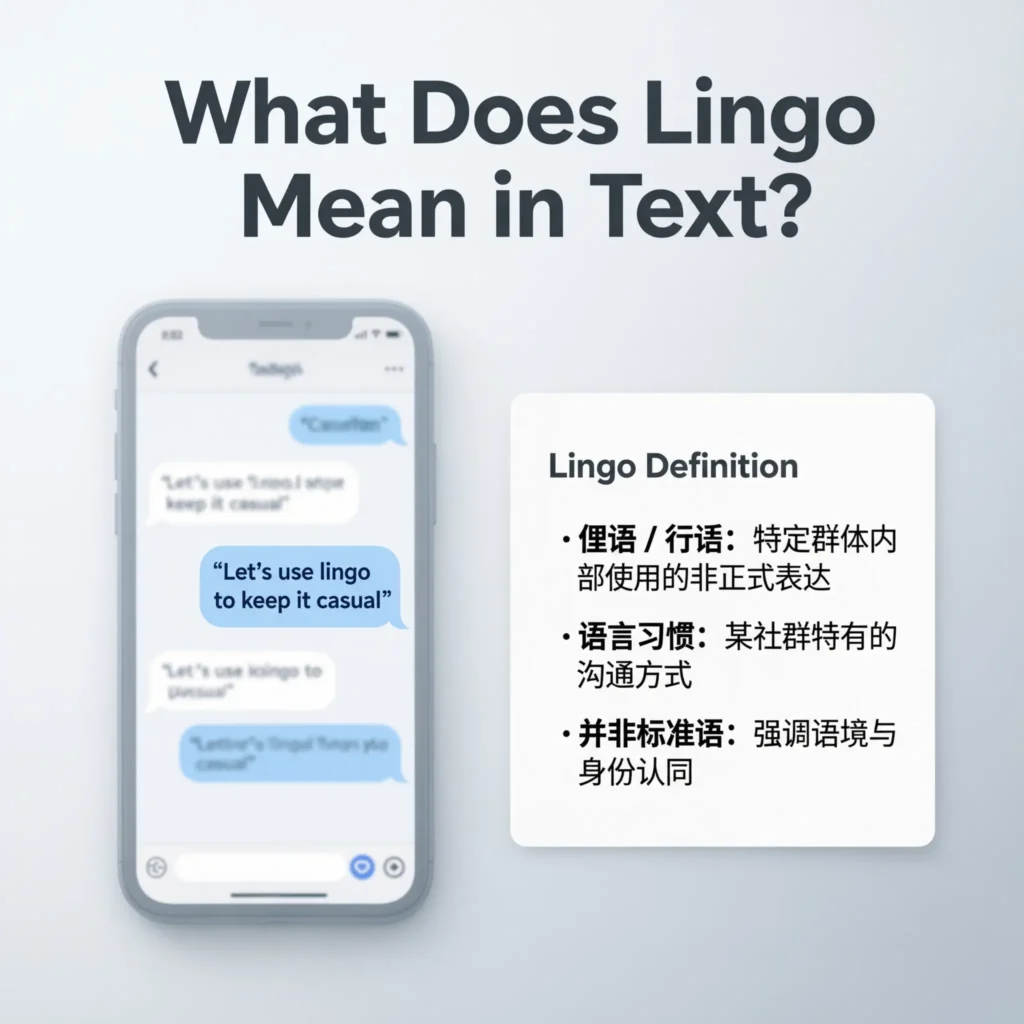
In slang, “lingo” simply means a specific type of language, vocabulary, or way of speaking used by a particular group of people.
👉 In easy terms:
Lingo = the special words or slang a group uses
It’s not an abbreviation or acronym like “LOL” or “BRB.” Instead, it’s a casual word people use to talk about language.
Simple Meaning:
- General meaning: A style of speaking or vocabulary
- Slang meaning: Informal or trendy words used by certain groups (like teens, gamers, or professionals)
Example:
- “I don’t understand Gen Z lingo.”
- “He’s using gamer lingo again.”
Does It Have Multiple Meanings?
Yes, slightly:
- General language (e.g., medical lingo, legal lingo)
- Internet slang or trendy speech (most common today)
In modern texting, it usually refers to trendy or group-specific slang.
Where Is Lingo Used?

The word “lingo” is used across many platforms and situations, especially where people notice different styles of communication.
📱 Common Places You’ll See It:
- TikTok – “This Gen Z lingo is wild 😭”
- Instagram – Comments about trends and slang
- Snapchat – Casual chats between friends
- WhatsApp/Texting – Everyday conversations
- Twitter (X) – Discussions about internet culture
👥 Who Uses It?
- Teens & Gen Z – Most frequent users
- Content creators – Talking about trends
- Gamers – Referring to gaming-specific terms
- Professionals (casually) – “Office lingo” jokes
💡 Key Insight:
“Lingo” is not the slang itself—it’s the word used to describe slang or specialized vocabulary.
Examples of Lingo in Conversation

Here are some natural, chat-style examples so you can see how “lingo” is used in real conversations:
- Friend 1: What does “rizz” even mean?
Friend 2: It’s just Gen Z lingo for charm 😂 - Text Message:
“Bro stop using gamer lingo, I don’t get it 😭” - Instagram Comment:
“This TikTok lingo changes every week!” - Flirty Chat:
“Teach me your lingo… I wanna understand you better 😉” - Funny Situation:
“I tried using their slang but messed up the lingo completely 😅” - Work Chat (Casual):
“Too much corporate lingo in this email lol” - Gaming Chat:
“Learn the lingo first, then you’ll understand the game.”
These examples show that “lingo” is flexible and works in many tones—funny, casual, or even slightly flirty.
When to Use and When Not To Use Lingo
✅ When to Use “Lingo”
Use it when talking about:
- Slang or trendy words
- Group-specific language (gaming, business, etc.)
- Cultural or generational communication styles
✔ Examples:
- “I need to learn this new lingo.”
- “That’s just internet lingo.”
❌ When NOT to Use It
Avoid using “lingo” when:
- You need formal or professional language
- You’re writing academic or official documents
- The audience may not understand casual wording
🚫 Example (Too casual for work):
- “This report uses too much lingo” → Better: “This report uses too much jargon.”
🎯 Tone Guide:
- Casual: ✅ Perfect fit
- Friendly chats: ✅ Very common
- Professional: ⚠️ Use “jargon” instead
- Flirty: ✅ Can work playfully
Similar Slang Words or Alternatives
Here are some related terms that are often used alongside or instead of “lingo”:
- Slang – Informal words used in everyday conversation
- Jargon – Specialized language used in professions (e.g., business jargon)
- Buzzwords – Trendy or overused words, often in marketing
- Terminology – Formal word for specific terms in a field
- Expressions – Common phrases people use in speech
Quick Comparison:
- Lingo: Casual and general
- Slang: Informal words specifically
- Jargon: Professional or technical
FAQs
What does “lingo” mean from a girl?
It means the same thing—she’s referring to a style of language or slang. It’s not gender-specific.
Is “lingo” slang rude?
No, “lingo” is completely neutral. It’s not rude or offensive in any way.
Can I use “lingo” in professional chats?
It’s better to avoid it in formal settings. Use “jargon” or “terminology” instead for a more professional tone.
Does “lingo” have any flirty meaning?
Not directly, but it can sound playful in flirty chats, like:
“Teach me your lingo 😉”
Is “lingo” still popular in 2026?
Yes! It’s still widely used, especially when talking about internet trends and Gen Z slang.
Conclusion
“Lingo” is a simple but powerful word that helps describe how different groups communicate. In slang, it refers to the unique words, phrases, or speaking styles used by specific communities, if that’s Gen Z, gamers, or professionals. It’s casual, friendly, and super common in online conversations.
If you’re ever confused by new slang, just remember—you’re not alone, and it’s all part of learning the latest “lingo.” Use it casually in chats, avoid it in formal writing, and you’ll sound natural and confident every time.