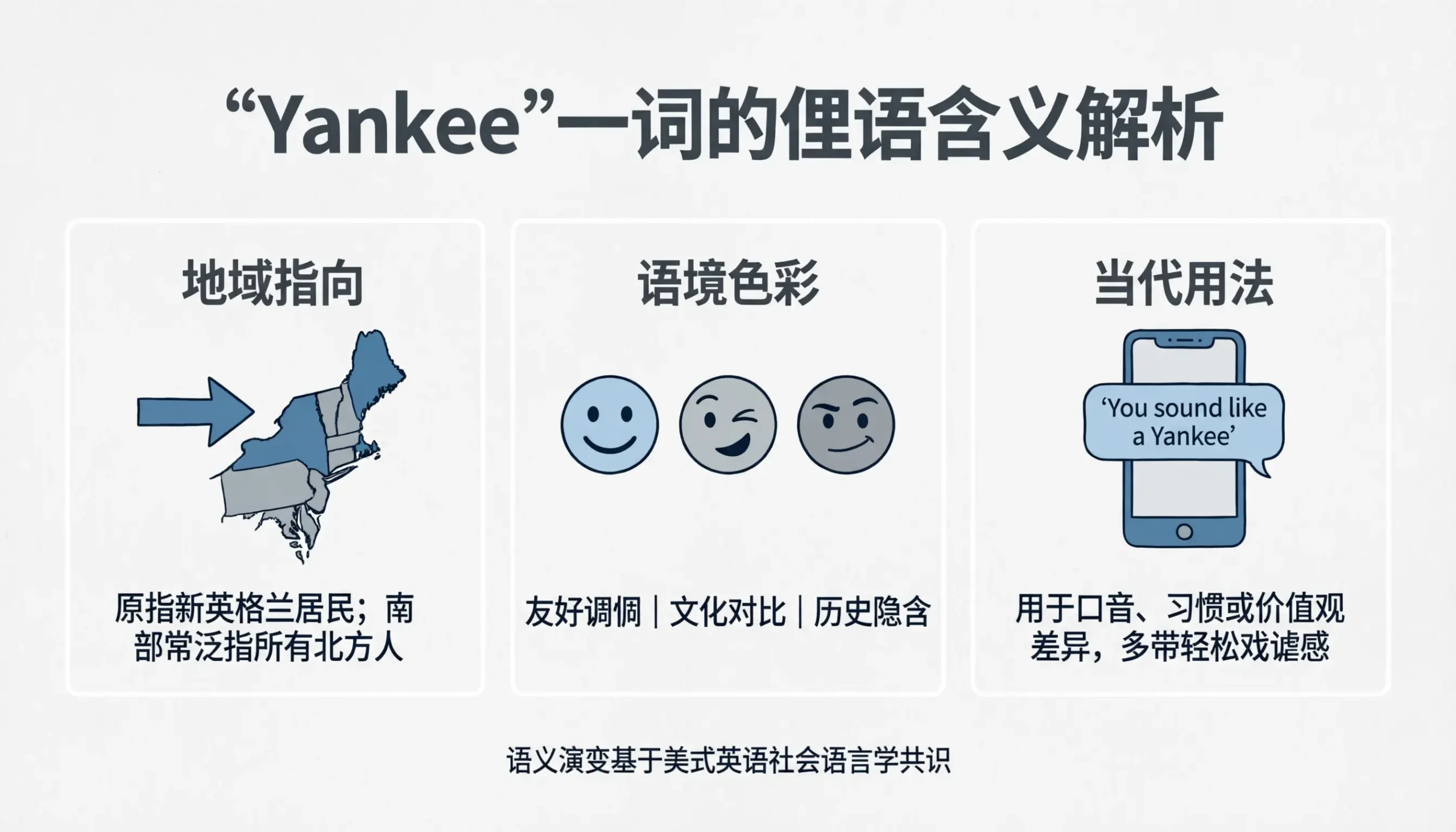
Ever been scrolling through comments or chatting with someone online and suddenly seen the word “Yankee” pop up? Maybe someone said, “You sound like a Yankee,” or joked, “That’s such a Yankee thing to say.” If you paused for a second wondering what they meant, you’re not alone.
The term “Yankee” has been around for centuries, but its slang meaning can shift depending on who’s saying it—and where. Sometimes it’s friendly, sometimes teasing, and sometimes it carries a bit of history behind it. Let’s break down the exact Yankee meaning in slang, when to use it, and how it sounds in modern conversations.
What Does Yankee Mean in Text?

The Yankee meaning in slang usually refers to a person from the United States. However, the exact meaning depends on context:
- Outside the U.S. – “Yankee” often means any American. For example, someone in Europe or Asia might casually call Americans “Yanks” or “Yankees.”
- Within the U.S. – The meaning can be more specific. In the Southern states, “Yankee” often refers to someone from the Northern states.
- Historical meaning – During the American Civil War, “Yankee” referred to soldiers from the Union (Northern states).
- Sports reference – It can also refer to a fan or player of the New York Yankees baseball team.
In modern slang, it’s usually casual and descriptive rather than offensive. Still, tone matters.
Where Is Yankee Used?

Today, “Yankee” appears in different settings:
- Social media platforms like Instagram, TikTok, X (Twitter), and Facebook
- Online gaming chats, especially in international servers
- Text messages between friends from different countries
- Travel conversations when discussing nationality
It’s more commonly used by:
- People outside the U.S. referring to Americans
- Southerners describing Northerners
- Sports fans talking about baseball
Among teens and Gen Z users, “Yankee” isn’t super trendy slang—but it still pops up, especially in global conversations.
Examples of Yankee in Conversation

Here are some realistic chat-style examples to show how it naturally appears:
1. Friendly international chat
A: “Where are you from?”
B: “I’m from Texas.”
A: “Ohhh, a Yankee! Nice 😄”
2. Teasing joke
A: “You drink iced coffee in winter?”
B: “Yeah, why?”
A: “That’s such a Yankee move.”
3. Gaming server
Player1: “Who’s staying up for the event?”
Player2: “Not me, it’s 3AM here.”
Player3: “Typical Yankees, different time zone 😂”
4. Travel conversation
A: “The Yankees are visiting our city this summer.”
B: “Tourist season is coming!”
5. Southern U.S. context
A: “He just moved down from New York.”
B: “Oh, he’s a Yankee then.”
6. Sports context
A: “Who are you rooting for?”
B: “Always the Yankees!”
As you can see, tone makes all the difference. It can sound playful, descriptive, or sometimes slightly sarcastic.
When to Use and When Not To Use Yankee
✅ When It’s Okay to Use
- Casual conversations about nationality
- Friendly teasing among friends
- Sports discussions about the New York Yankees
- International chats where “Yankee” simply means American
❌ When to Avoid It
- Formal business emails
- Professional work chats
- Sensitive political discussions
- When speaking to someone who might find it offensive
While “Yankee” is usually harmless, some Americans—especially in certain regions—may feel the term carries historical or cultural weight. If you’re unsure, it’s safer to say “American.”
Is Yankee Friendly, Casual, or Rude?
The tone of “Yankee” depends heavily on context:
- Friendly – When said jokingly among friends.
- Casual – When describing nationality in everyday talk.
- Potentially rude – If said with a mocking or negative tone.
For example, calling someone a “Yankee” with a smile emoji feels different than saying it angrily in a heated debate.
Similar Slang Words or Alternatives
Here are a few related terms and what they mean:
- Yank – A shortened version of Yankee (often used internationally).
- Gringo – A Spanish slang term referring to foreigners, often Americans (tone varies).
- Brit – Slang for someone from Britain.
- Aussie – Casual term for someone from Australia.
- Southerner/Northerner – U.S. regional alternatives instead of Yankee.
These words, like “Yankee,” depend heavily on tone and relationship.
A Quick History Note
The word “Yankee” dates back to the 18th century. It became widely known during the American Revolutionary period and later during the American Civil War.
The famous baseball team, the New York Yankees, helped popularize the term globally. Thanks to movies, sports culture, and international news, “Yankee” became shorthand for Americans worldwide.
Today, it’s more cultural than political in everyday slang use.
FAQs
What does Yankee mean from a girl?
It usually just means “American.” If said playfully, it might be teasing in a cute or friendly way. Context and tone matter more than gender.
Is Yankee slang rude?
Not usually. It’s mostly neutral or playful. However, in political or heated discussions, it could sound insulting.
Can I use Yankee in professional chats?
It’s best not to. Stick with “American” in professional or academic settings.
Does Yankee have any flirty meaning?
Not directly. But in playful banter, someone might jokingly call you “Yankee” as a fun nickname.
Is Yankee still popular in 2026?
Yes, though it’s not trending slang. It remains commonly used internationally and in sports contexts.
Conclusion
So, what’s the final word on Yankee meaning slang? In most modern chats, “Yankee” simply refers to an American—or sometimes specifically someone from the Northern United States. It can be friendly, playful, or slightly teasing depending on tone and setting.
If you’re chatting casually with friends or talking about sports like the New York Yankees, you’re perfectly fine using it. Just avoid it in formal or sensitive conversations.
When in doubt, pay attention to context—and you’ll use it confidently without any awkward misunderstandings.