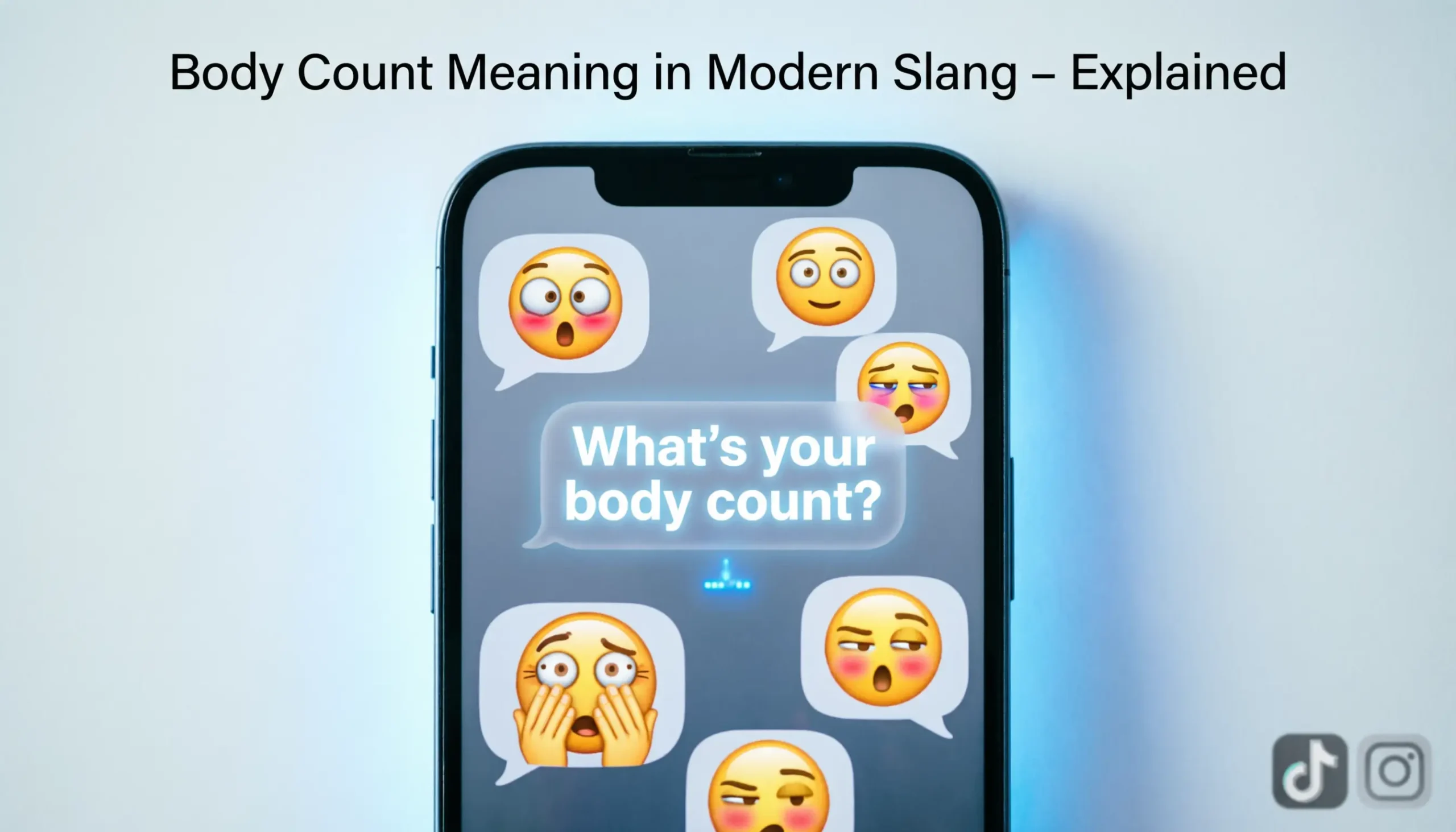
Ever been in a group chat where someone randomly asks, “What’s your body count?” and the whole conversation suddenly gets awkward? 😅
If you’ve seen this phrase on TikTok, Instagram comments, or late-night text conversations and felt confused (or slightly shocked), you’re not alone. The term “body count” has taken on a completely different meaning in modern slang compared to its original definition.
In this guide, we’ll break down the exact body count meaning in slang, where it’s used, real-life chat examples, and whether it’s something you should casually throw into conversations—or avoid completely.
What Does Body Count Mean in Text?
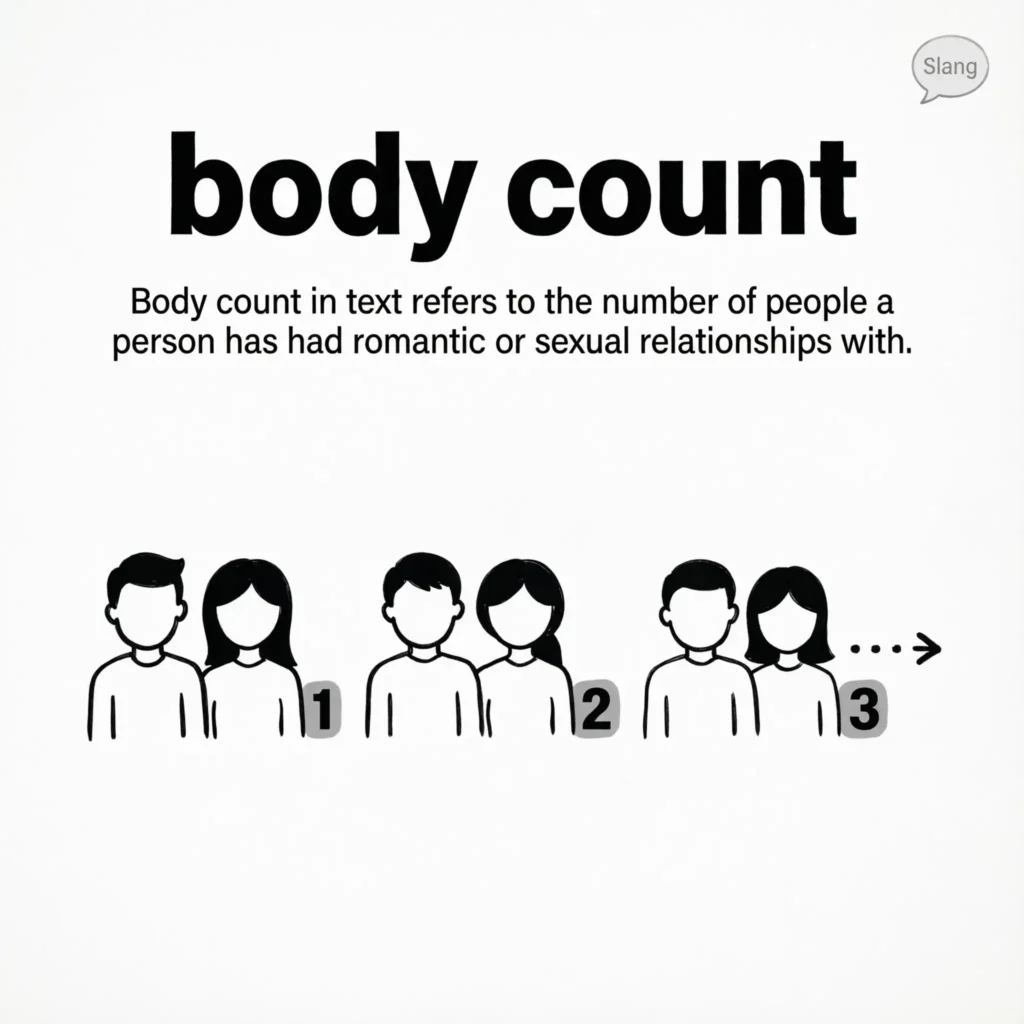
In slang, “body count” usually refers to the number of people someone has had sexual relationships with.
So if someone asks, “What’s your body count?” they are asking how many sexual partners you’ve had.
Original Meaning vs. Slang Meaning
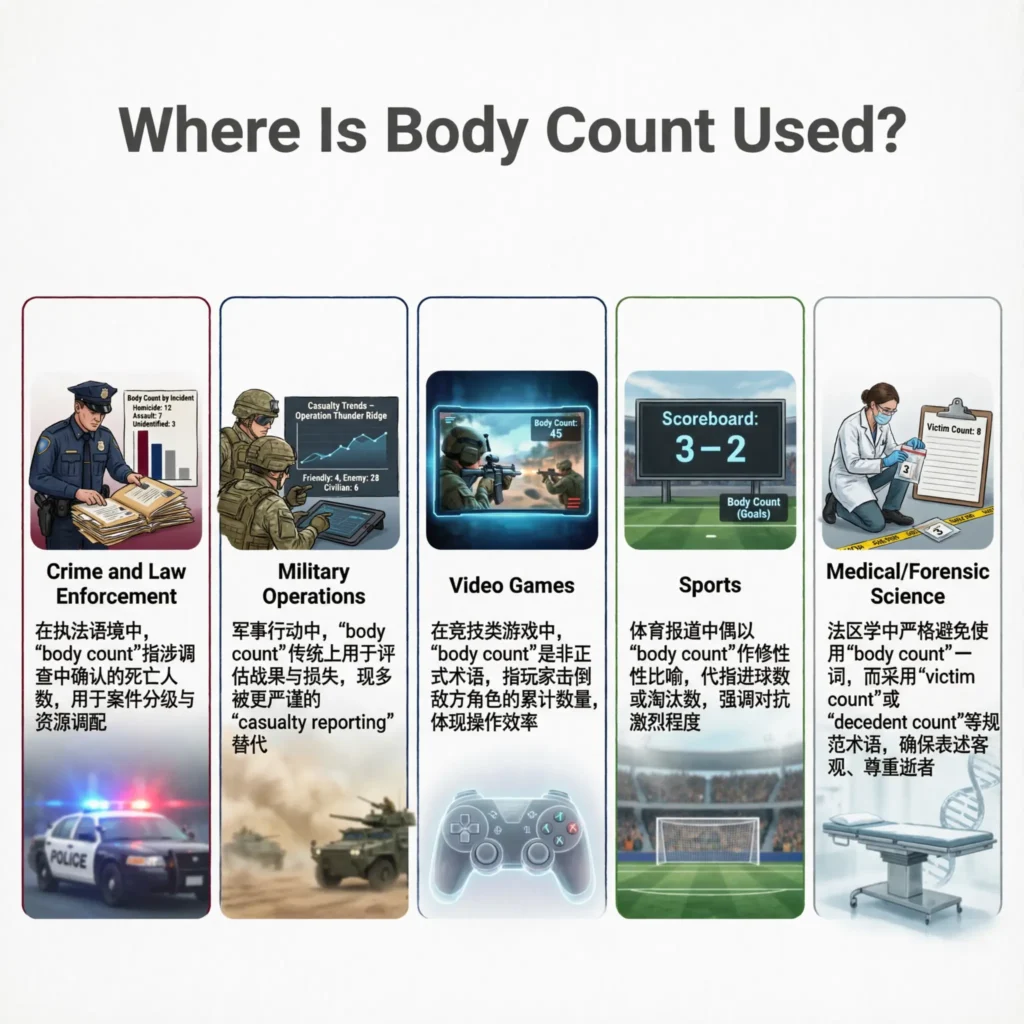
Originally, “body count” referred to the number of people killed in a war, disaster, or violent event. It’s still used this way in news reports and serious discussions.
However, in modern texting and social media slang, the meaning has shifted almost entirely toward romantic or sexual history.
Does It Have Multiple Meanings?
Yes, depending on context:
- Slang meaning (most common in chats): Number of sexual partners.
- Gaming meaning: Number of opponents eliminated in a game.
- Traditional meaning: Number of deaths in a tragic event.
On social media platforms like TikTok, the slang meaning is by far the most common in casual conversations.
Where Is Body Count Used?
The slang version of “body count” is most commonly used on:
- TikTok
- Snapchat
- Twitter/X
- Private text messages
- Dating apps
It’s especially popular among:
- Teens and young adults
- College students
- Dating culture communities
- Influencer and podcast discussions
You’ll often see it in:
- Street interviews (“What’s your body count?” videos)
- Relationship debates
- Comment sections arguing about double standards
- Meme content
It’s rarely used in professional spaces and almost never appropriate in formal conversations.
Examples of Body Count in Conversation

Here are some realistic chat-style examples to help you understand how it’s used:
1. Casual & Curious
A: “Be honest… what’s your body count?”
B: “Why are you asking that out of nowhere? 😂”
2. Flirty Conversation
A: “I don’t date guys with a high body count.”
B: “Don’t worry, I’m very exclusive 😌”
3. Funny / Meme Style
Friend 1: “What’s your body count?”
Friend 2: “In video games or real life? Because that changes things.”
4. Argumentative Tone
A: “Guys care about body count more than girls.”
B: “That’s such a double standard.”
5. Gaming Context
Gamer 1: “What was your body count last round?”
Gamer 2: “25 eliminations!”
6. Defensive Reply
A: “So what’s your body count?”
B: “That’s kind of personal, don’t you think?”
As you can see, tone and context matter a lot with this phrase.
When to Use and When Not To Use Body Count
✅ When It Might Be Okay
- Among close friends who are comfortable discussing dating topics
- In casual, joking conversations
- In gaming contexts (referring to eliminations)
- In dating discussions where both people are open about relationship history
❌ When NOT to Use It
- In professional settings
- In school presentations or academic writing
- With someone you don’t know well
- In formal or respectful conversations
- When the topic may make someone uncomfortable
Because it involves personal and sexual history, asking about someone’s body count can feel intrusive or disrespectful.
It’s considered:
- Casual ✔
- Potentially flirty ✔
- Sometimes controversial ✔
- Professional? ❌ Absolutely not
If you’re unsure whether it’s appropriate, it’s usually better not to ask.
Is Body Count Considered Rude?
It depends on:
- Who you’re asking
- Your tone
- Your relationship with them
- The setting
For some people, it’s just playful slang. For others, it feels invasive and judgmental.
There’s also ongoing debate online about whether it unfairly targets or shames certain genders more than others.
If someone avoids answering or seems uncomfortable, respect that boundary.
Similar Slang Words or Alternatives
Here are a few related slang terms you might hear in similar conversations:
1. Body Number
A softer variation of “body count,” but meaning the same thing.
2. Hoe Phase
Refers to a period in someone’s life when they casually date or hook up with multiple people.
3. Player
Someone who dates multiple people at once, often without serious commitment.
4. Rizz
Short for charisma—especially the ability to attract romantic partners.
5. Smash
Slang meaning to have sex with someone.
These terms often appear together in dating-related conversations online.
Why Is Body Count So Popular on Social Media?
The term became especially popular due to:
- Viral street interview videos
- Dating podcasts
- TikTok debates
- Meme culture
Platforms like TikTok and Instagram have amplified conversations around modern dating norms, making slang like “body count” trend quickly.
It’s often used to spark reactions, debates, or controversial opinions—especially in short-form video content.
FAQs
What does body count mean from a girl?
It means the same thing. If a girl asks about body count, she’s usually asking how many sexual partners someone has had. However, context and tone matter—she could be joking, curious, or serious.
Is body count slang rude?
It can be. Some people see it as harmless slang, while others think it’s invasive or disrespectful. Always consider the setting and your relationship with the person before using it.
Can I use body count in professional chats?
No. It’s far too personal and inappropriate for workplace conversations, emails, or academic discussions.
Does body count have any flirty meaning?
Yes, sometimes. In dating conversations, it can be used flirtatiously—but it can also quickly become awkward. Use with caution.
Is body count still popular in 2026?
Yes. The term is still widely used on social media, especially in dating-related content and viral interviews.
Conclusion
So, what does body count mean in slang?
In modern texting and social media culture, it refers to the number of sexual partners someone has had. While the phrase originally described casualties in serious situations, its meaning has shifted dramatically in casual online conversations.
Before using it, remember:
- It’s informal
- It can be sensitive
- It’s not professional
- Context matters
If you’re chatting with close friends or discussing dating openly, it might fit naturally. But in formal or unfamiliar settings, it’s best to avoid it.
When in doubt, keep conversations respectful—and always read the room first. 💬