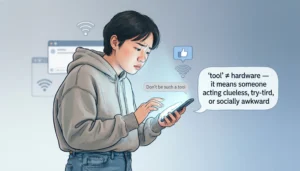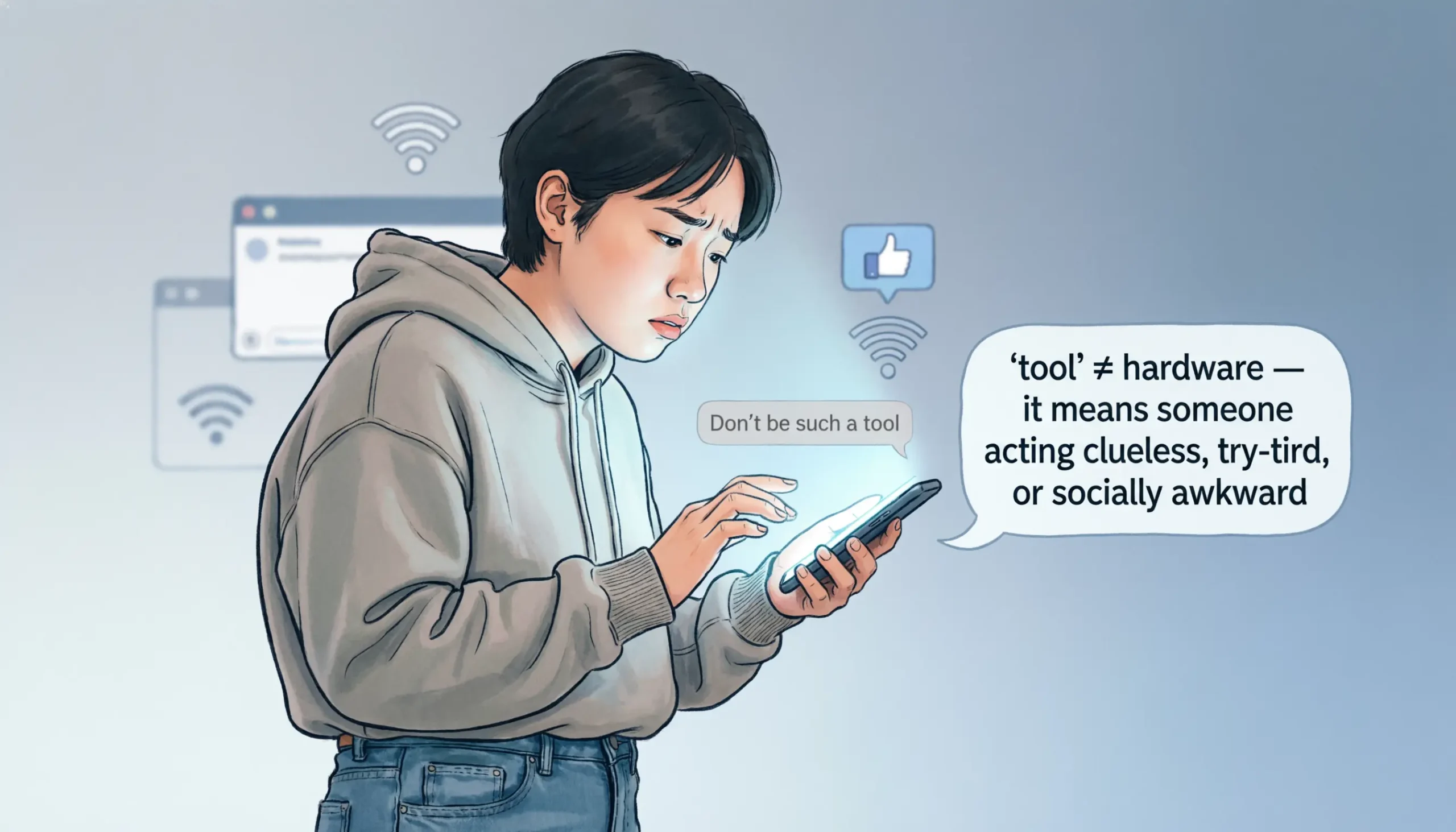
Ever been scrolling through comments or reading a heated group chat when someone suddenly types, “Don’t be such a tool,” and you pause for a second?
At first glance, you might think they’re talking about an actual hammer or screwdriver. But nope — they’re definitely not discussing hardware. If you’ve seen “tool” used in a text, meme, or TikTok comment and wondered what it really means, you’re not alone.
Slang changes fast, and words we already know can take on completely different meanings online. In this guide, we’ll break down the tool slang meaning, how it’s used in text, when it’s okay to say it, and when you might want to avoid it.
What Does Tool Mean in Text?
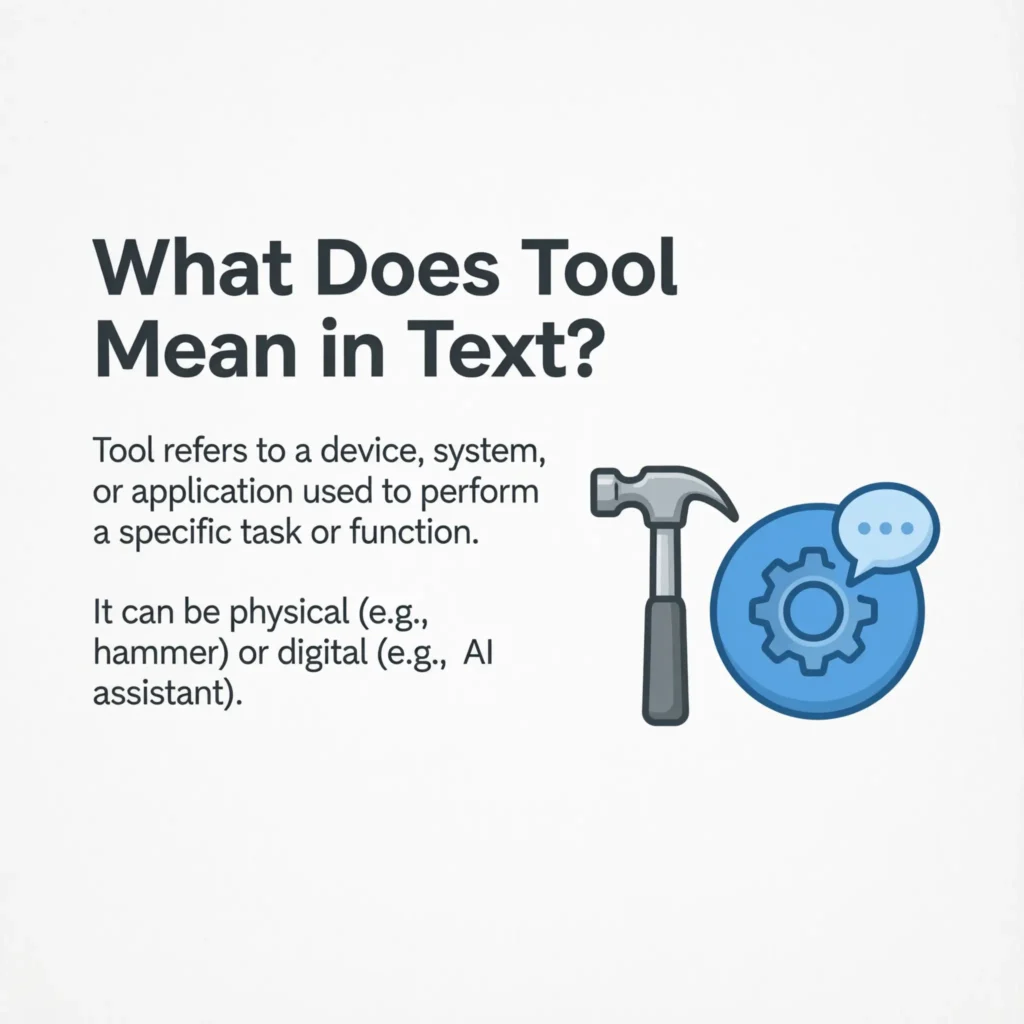
In slang, “tool” is an insult.
When someone calls a person a “tool,” they usually mean:
- The person is acting foolish or clueless
- They’re being used or manipulated by someone else
- They’re trying too hard to look cool
- They’re behaving in an annoying or arrogant way
The slang meaning comes from the literal idea of a tool — an object that is used by someone else. So if someone is called a “tool,” it often implies they’re being “used” or don’t think for themselves.
Simple Definition:
Tool (slang) = A person who is acting wordless, annoying, or easily manipulated.
It’s typically negative and slightly insulting. Sometimes it’s playful between friends, but often it carries a sarcastic or mocking tone.
Where Is Tool Used?
You’ll commonly see “tool” used in:
- Text messages
- Instagram comments
- TikTok replies
- Twitter/X arguments
- Online gaming chats
- Group chats among friends
It’s especially common among:
- Teenagers and young adults
- Gamers
- People involved in online debates
- Friends joking around
Unlike abbreviations such as “LOL” or “BRB,” “tool” isn’t a texting shortcut — it’s just a regular word with a slang meaning.
It’s more common in casual conversations and online roasting culture. You won’t usually see it in professional or academic settings.
Examples of Tool in Conversation
Here are some realistic chat-style examples so you can see how it’s used naturally:
1. Friendly teasing
Alex: Bro, you wore socks with sandals?
Mike: It’s called fashion.
Alex: 😂 You’re such a tool.
2. Gaming chat
Player1: Why did you rush alone??
Player2: I thought I could win.
Player1: Dude… don’t be a tool.
3. Social media comment
Comment: He bought fake followers again. What a tool.
4. Flirty sarcasm
Emma: You forgot my coffee order again.
Jake: I’ll fix it!
Emma: You’re lucky you’re cute, tool.
5. Argument tone
“Stop defending him. He’s clearly using you. Don’t be a tool.”
6. Meme reply
“When you text your ex at 2am… tool behavior.”
As you can see, tone matters a lot. It can range from playful to genuinely insulting.
When to Use and When Not To Use Tool
Because “tool” is an insult, context is everything.
✅ When It’s Okay to Use
- With close friends who understand your humor
- In playful teasing
- In casual online banter
- In meme culture or jokes
If your friend forgets something silly or makes a harmless mistake, calling them a “tool” in a joking tone might land well — especially if that’s part of your friendship style.
❌ When Not to Use It
- In professional emails
- At work
- In school assignments
- With people you don’t know well
- During serious arguments
Calling someone a “tool” in a formal or sensitive setting can come across as disrespectful or immature.
It’s definitely too casual and too negative for professional communication.
Tone Breakdown: Is Tool Friendly, Casual, or Rude?
Let’s quickly break it down:
- Friendly? Sometimes (if joking with close friends)
- Casual? Yes
- Professional? No
- Flirty? Rarely, and only playfully
- Rude? Often, yes
Most of the time, it’s considered mildly rude. It’s not extremely offensive, but it’s still an insult.
Similar Slang Words or Alternatives
If you’re looking for similar slang terms, here are a few:
1. Clown 🤡
Means someone is acting silly or embarrassing.
2. Goof
A lighter, more playful way to call someone silly.
3. Try-hard
Someone trying too hard to impress others.
4. NPC
Used in gaming slang to describe someone acting robotic or basic.
5. Simp
Someone who is overly submissive or desperate for attention, especially romantically.
Each of these has slightly different vibes, but they can overlap depending on the situation.
FAQs About Tool Slang Meaning
What does “tool” mean from a girl?
If a girl calls someone a “tool,” it usually means she thinks the person is acting annoying, immature, or foolish. It could be playful teasing — or genuine frustration. Tone matters.
Is “tool” slang rude?
Yes, it’s generally considered rude or insulting. However, among close friends, it can be used jokingly.
Can I use “tool” in professional chats?
No. It’s too informal and negative for work, school, or professional communication.
Does “tool” have a flirty meaning?
Not directly. But in playful teasing between couples, it might be used jokingly. For example:
“You forgot our anniversary, tool 😒.”
Even then, it depends heavily on the relationship.
Is “tool” still popular in 2026?
Yes, it’s still used — especially in online arguments, gaming communities, and casual group chats. It’s not trendy slang like some TikTok phrases, but it hasn’t disappeared either.
Why Do People Use “Tool” as an Insult?
Language evolves based on metaphor. Since a tool is something that gets used by someone else, calling a person a tool suggests:
- They’re being controlled
- They lack independent thinking
- They’re acting foolishly
It’s a short, punchy insult — which makes it perfect for fast-moving chats and comment sections.
Unlike harsher insults, “tool” feels slightly toned down. It’s insulting, but not extreme.
Quick Comparison: Tool vs. Idiot
Some people wonder if “tool” is the same as “idiot.”
Not exactly.
- Idiot = Directly calling someone foolish
- Tool = Suggesting someone is foolish, being used, or acting embarrassing
“Tool” often implies behavior more than intelligence.
How to Respond If Someone Calls You a Tool
If someone says, “You’re such a tool,” here are a few ways to respond:
Playful reply:
“Takes one to know one 😂”
Confident reply:
“Relax, it’s not that deep.”
Curious reply:
“What did I even do?”
Or, if it crosses a line, it’s okay to say:
“Hey, I don’t appreciate that.”
Remember, tone and relationship matter more than the word itself.
Conclusion
It’s a casual insult used to describe someone acting foolish, annoying, manipulated, or trying too hard. You’ll mostly see it in texts, social media comments, gaming chats, and friend groups.
It can be playful — but it can also be rude.
The key is understanding your audience. With close friends, it might be harmless teasing. In professional or serious settings? Definitely avoid it.
Now that you know the tool slang meaning, you can confidently understand (and decide whether to use) it in your online conversations.