Ever been scrolling through a chat, Instagram comment, or TikTok caption and suddenly saw someone type “ion”—and your brain went straight to chemistry class? 😅 You’re not alone. A lot of people first assume it has something to do with atoms and electrons, but in texting and social media, ion means something completely different. It’s short, casual, and very common in online conversations today. In this guide, we’ll break down the ion slang meaning, where it comes from, how people actually use it in real chats, and if it’s friendly, flirty, or too casual for certain situations.
What Does Ion Mean in Text?
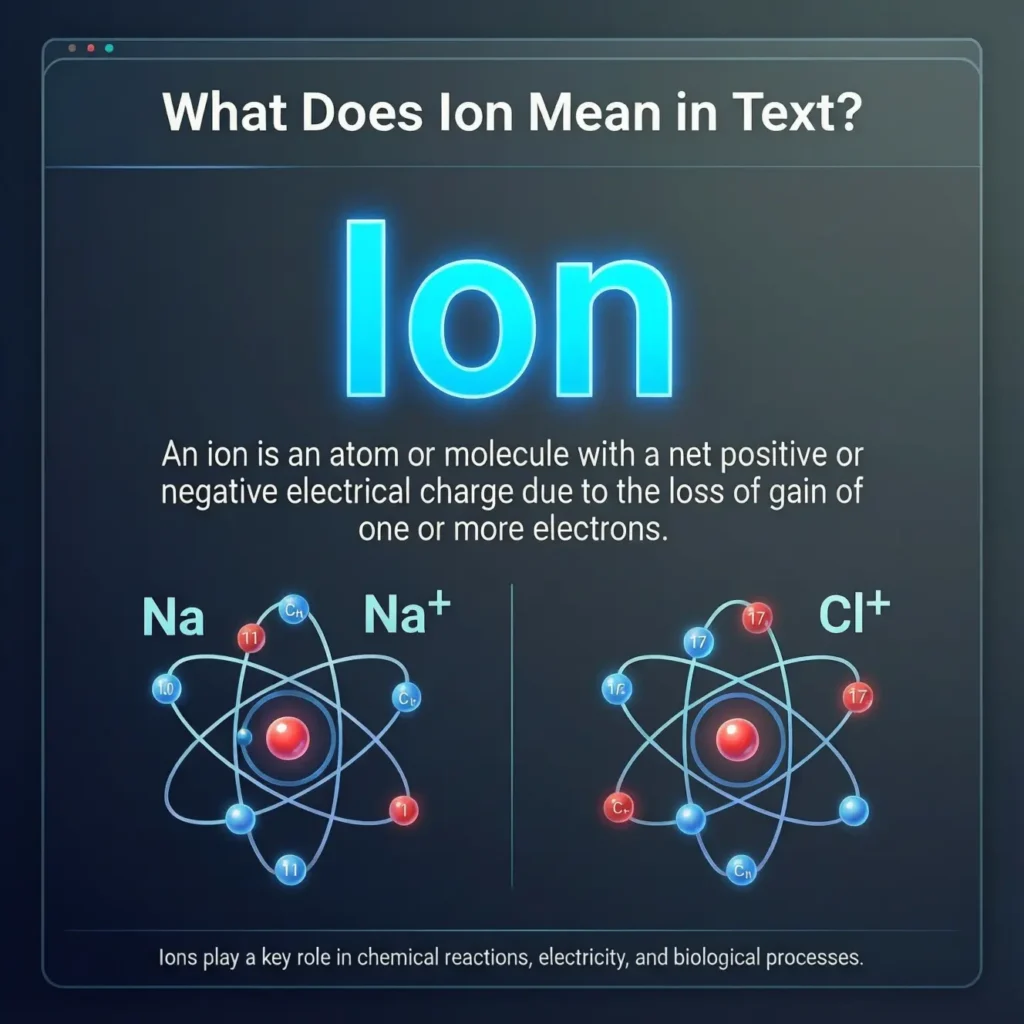
In slang, “ion” means “I don’t”.
It’s a phonetic spelling that comes from how “I don’t” sounds when said quickly out loud—especially in casual speech. Over time, people started typing it the same way it sounds.
Simple breakdown:
- Ion = I don’t
- Example: “Ion care” → “I don’t care”
Sometimes, you might also see it used to mean “I ain’t” or “I don’t really”, depending on context. There’s no single “official” grammar rule—it’s all about how it flows in conversation.
⚠️ Important:
This slang has nothing to do with science ions (charged particles). In texting, it’s purely conversational.
Where Is Ion Used?
The slang ion is most common in casual, informal online spaces, especially among younger users.
Common platforms:
- Text messages
- Snapchat
- Instagram DMs & comments
- TikTok captions and replies
- Twitter/X
- Gaming chats & Discord
Who uses it most?
- Teens and young adults
- People comfortable with casual internet slang
- Communities influenced by spoken dialects and fast texting styles
It’s not tied to one region, but it’s especially popular in urban slang and Gen Z online culture.
Examples of Ion in Conversation

Here are some realistic, chat-style examples to help you see how ion is used naturally:
- Friend: “You coming out tonight?”
You: “Ion think so, I’m tired.” - Text: “Ion even know why he said that 😂”
- Flirty: “Ion wanna argue, I just wanna see you.”
- Funny: “Ion got money like that 💀”
- Casual: “Ion care what people think.”
- Gaming chat: “Ion have enough coins for that upgrade.”
- Confident tone: “Ion need approval from anyone.”
As you can see, ion usually sets a relaxed, informal vibe.
When to Use and When Not To Use Ion
✅ When Ion Works Well
Use ion when:
- Chatting with friends
- Sending casual texts
- Commenting on social media
- Talking in gaming or group chats
- Matching a relaxed, conversational tone
It sounds natural, friendly, and modern in these settings.
❌ When to Avoid Ion
Avoid using ion when:
- Writing emails for work or school
- Talking to teachers, managers, or clients
- Sending formal or professional messages
- Situations where clarity and professionalism matter
Example:
- ❌ “Ion understand the assignment, sir.”
- ✅ “I don’t understand the assignment, sir.”
In formal contexts, ion can seem unprofessional or careless.
idm meaning slanghttps://meanilng.com/idm-meaning-slang/
Similar Slang Words or Alternatives
Here are a few slang terms that are often used in similar casual texting styles:
- IDK – I don’t know
- IDC – I don’t care
- Ain’t – Informal “is not / are not / do not”
- IMO – In my opinion
- Ngl – Not gonna lie
All of these, like ion, are best saved for informal chats.
ig meaning slanghttps://meanilng.com/ig-meaning-slang/
FAQs About Ion Slang Meaning
What does ion mean from a girl?
It usually just means “I don’t.” There’s no hidden meaning by default. Tone depends on the message—casual, funny, or sometimes flirty.
Is ion slang rude?
No, ion isn’t rude on its own. It’s casual. However, in serious or formal situations, it may sound disrespectful.
Can I use ion in professional chats?
It’s not recommended. Stick with “I don’t” in professional or academic settings.
Does ion have a flirty meaning?
Not directly, but it can sound flirty depending on context, like:
“Ion wanna talk to anyone else but you.”
Is ion still popular in 2026?
Yes. Ion remains popular in 2026, especially on TikTok, Snapchat, and casual texting among younger users.
Conclusion
The ion slang meaning is simple: it means “I don’t.” It’s a casual, phonetic shorthand that fits perfectly in relaxed conversations, social media, and texting with friends. While it’s easy to use and widely understood online, it’s best to avoid it in professional or formal situations. If you want to sound natural and up-to-date in casual chats, ion is perfectly fine—just use it in the right place.