
Introduction
You’re scrolling through Instagram or chatting with a friend, and suddenly someone drops, “That’s sick!” At first, you might think they’re talking about being ill—but the vibe doesn’t match at all. Instead, it sounds positive, even exciting. Confusing, right? Slang like this pops up everywhere, and meanings can flip depending on context. If you’ve ever paused mid-chat wondering what “sick” really means in modern slang, you’re not alone. This guide breaks it down in a simple, relatable way so you can understand it—and start using it confidently in your own conversations.
What Does Sick Mean in Text?
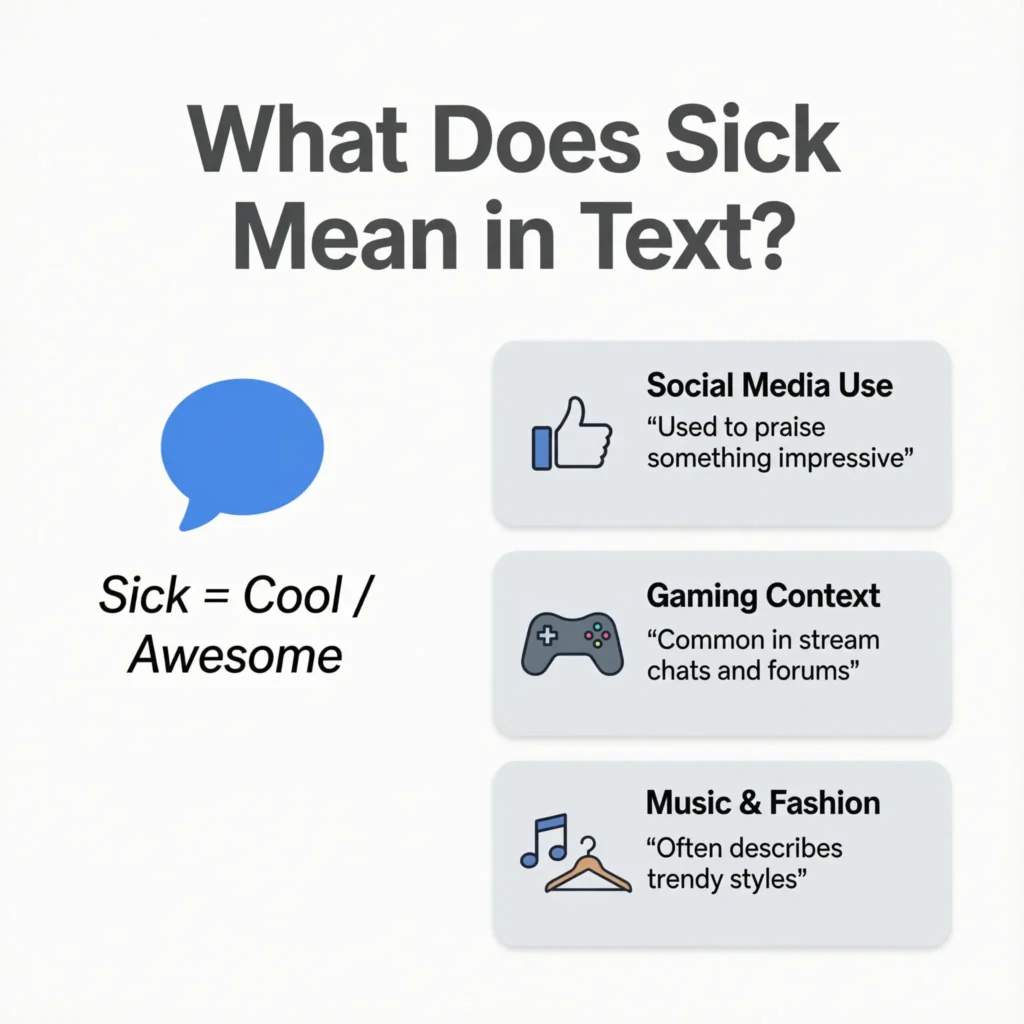
In slang, “sick” usually means something is extremely cool, impressive, or amazing. It’s often used to react to something exciting, like a great performance, stylish outfit, or impressive skill.
👉 Simple meaning:
- “Sick” = Awesome / Cool / Incredible
However, context matters. “Sick” can still carry its original meaning of being ill or unwell, but in casual online conversations, the positive slang meaning is far more common.
👉 Two main meanings:
- Positive slang: “That’s sick!” = That’s amazing!
- Literal meaning: “I feel sick” = I’m unwell
Tone and situation will help you figure out which one is being used.
Where Is Sick Used?

“Sick” is widely used across many digital platforms and everyday conversations. You’ll commonly see it in:
- Text messages (WhatsApp, Messenger, iMessage)
- Social media apps (Instagram, TikTok, Snapchat)
- Gaming chats (Discord, in-game chat)
- Comment sections on viral videos or posts
It’s especially popular among teens, young adults, and online communities, but honestly, people of all ages use it now. The slang has been around for years and continues to stay relevant in 2025.
You’ll often see it paired with emojis like 🔥😎🤯 to emphasize excitement.
Examples of Sick in Conversation
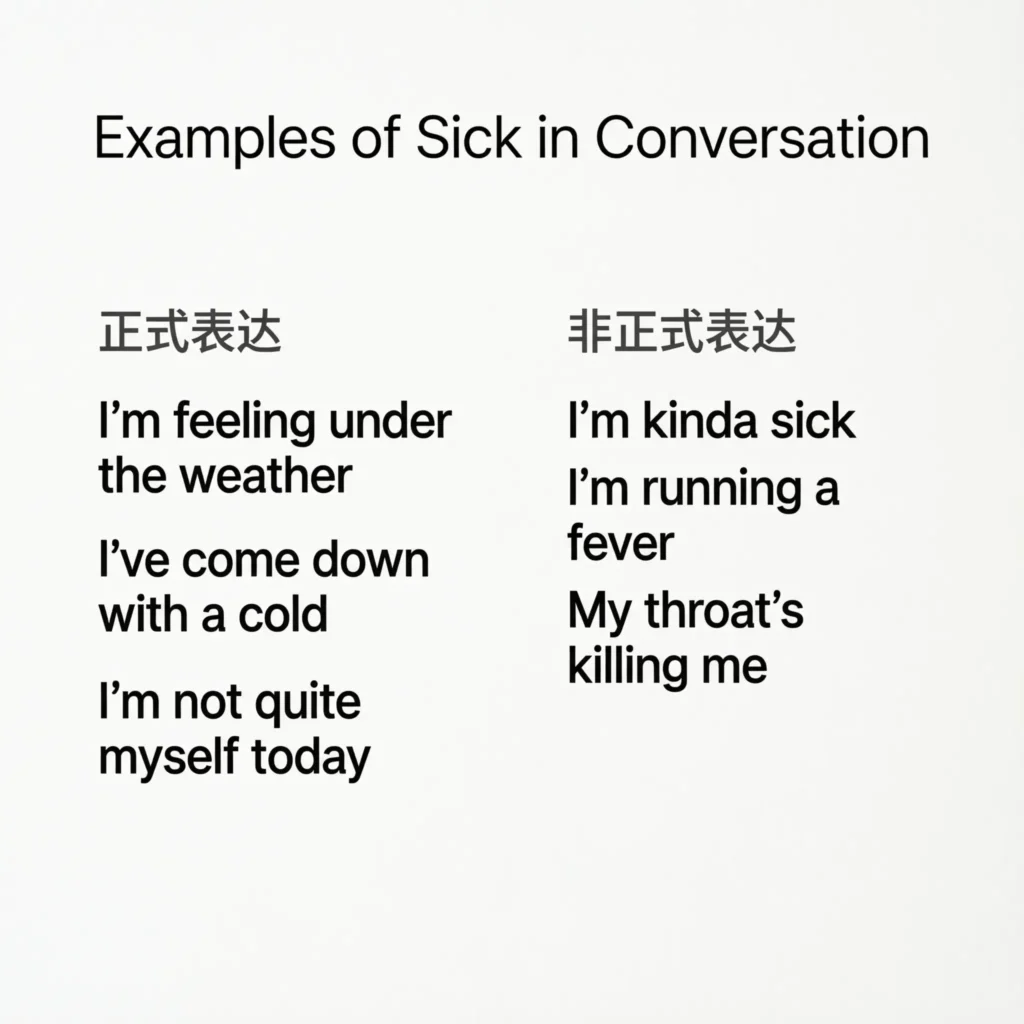
Here are some real-life style chat examples to show how “sick” is used:
- Friend 1: I just got front-row tickets!
Friend 2: That’s sick! 😍 - Text: Your new car looks sick 🔥
- Gamer chat: That move was sick bro, how did you do that?
- Flirty vibe: You looked sick in that outfit tonight 😉
- Funny context: That meme is sick 😂
- Excited reaction: This beat is actually sick!
- Casual reply: Dude, that trick was sick 💯
As you can see, it’s mostly used as a reaction word to show admiration or excitement.
When to Use and When Not To Use Sick
✅ When to Use It:
- Talking with friends or peers
- Reacting to something cool or impressive
- Social media comments or captions
- Casual conversations and chats
❌ When NOT to Use It:
- Formal settings (emails, job interviews, school essays)
- Professional communication with bosses or clients
- Serious conversations where clarity matters
For example:
- ❌ “Your presentation was sick” (in a formal office setting)
- ✅ “Your presentation was excellent”
Also, be careful in sensitive situations—if someone is actually unwell, saying “sick” in a joking or slang way might sound inappropriate.
Similar Slang Words or Alternatives
Here are some slang alternatives you can use instead of “sick”:
- Lit – Something exciting or fun
- Fire – Extremely good or impressive 🔥
- Dope – Cool or awesome
- Epic – Big, amazing, or unforgettable
- Untamed – Bold or impressive in a daring way
👉 Example:
“That outfit is fire” = Same vibe as “That outfit is sick”
FAQs
What does “sick” mean from a girl?
It usually means the same thing—something cool or attractive. It can sometimes carry a slightly flirty tone depending on context.
Is “sick” slang rude?
No, it’s not rude. It’s generally positive and friendly. Just avoid using it in formal situations.
Can I use “sick” in professional chats?
It’s best not to. “Sick” is too casual for professional or formal communication.
Does “sick” have any flirty meaning?
Yes, it can. If someone says, “You look sick,” it might mean you look really attractive or stylish.
Is “sick” still popular in 2026?
Absolutely. It remains a widely used and relevant slang term, especially online.
Conclusion
“Sick” is one of those slang words that completely flips its original meaning. Instead of describing illness, it’s now commonly used to say something is awesome, cool, or impressive. You’ll see it everywhere—from texts and social media to gaming chats. Just remember: it’s casual, friendly, and best used with people you’re comfortable with.