
Introduction
You’re scrolling through your messages, and suddenly someone drops a line like “BRB, AFK rn lol.” You pause… reread it… and still have no clue what’s going on. Sound familiar? Chat slang has taken over texting, social media, and online conversations, making communication faster—but sometimes confusing. If you’re new to online lingo or just trying to keep up with evolving trends, understanding chat slang can make a big difference. In this guide, you’ll learn what chat slang means, where it’s used, and how to use it naturally without feeling lost or awkward.
What Does Chat Slang Mean in Text?
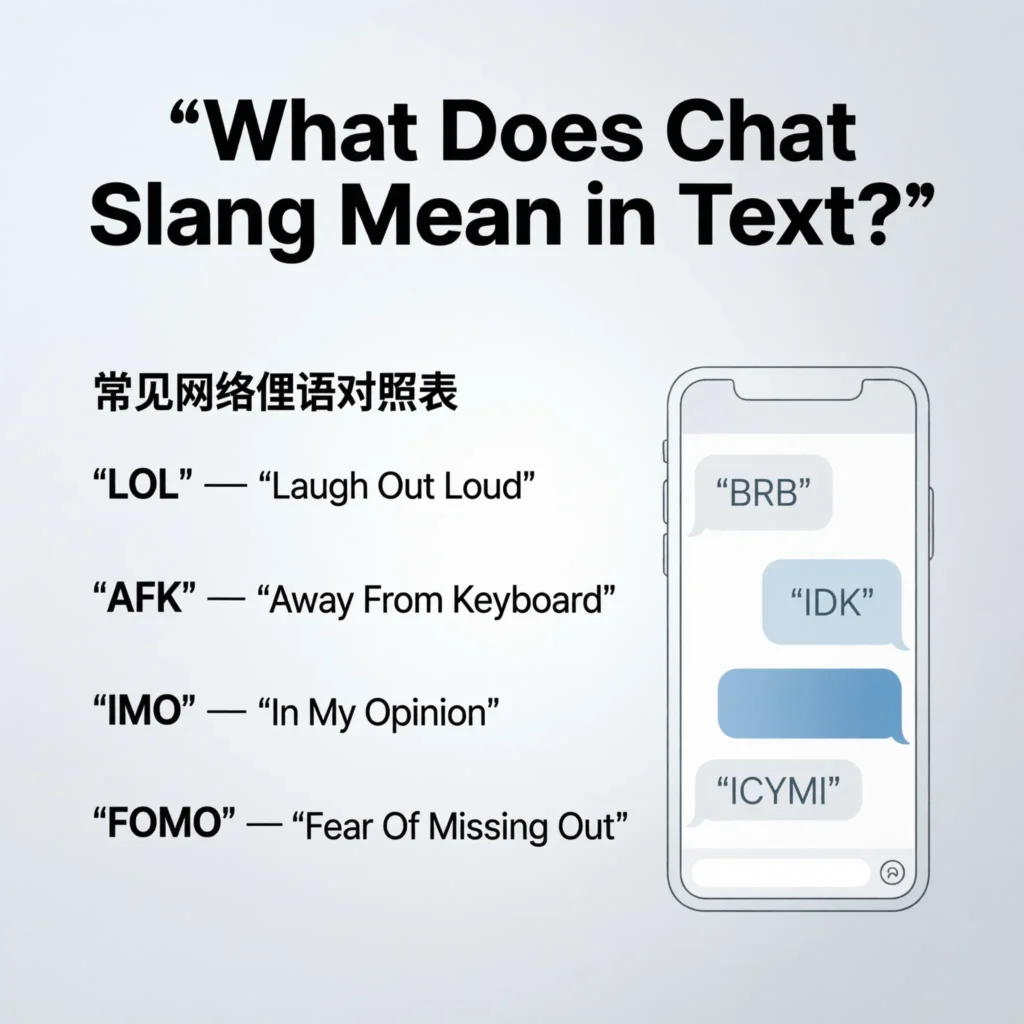
Chat slang refers to shortened words, abbreviations, or informal phrases people use in digital conversations to save time and sound more casual. Instead of typing full sentences, users rely on quick expressions like:
- LOL – Laughing Out Loud
- BRB – Be Right Back
- TTYL – Talk To You Later
- OMG – Oh My God
- IDK – I Don’t Know
These terms are designed to make chatting faster and more expressive. Some slang also carries tone—like humor, sarcasm, or excitement—without needing long explanations.
Chat slang can also evolve quickly. New terms pop up regularly, especially from younger users or online communities, and older ones may fade out over time.
Where Is Chat Slang Used?
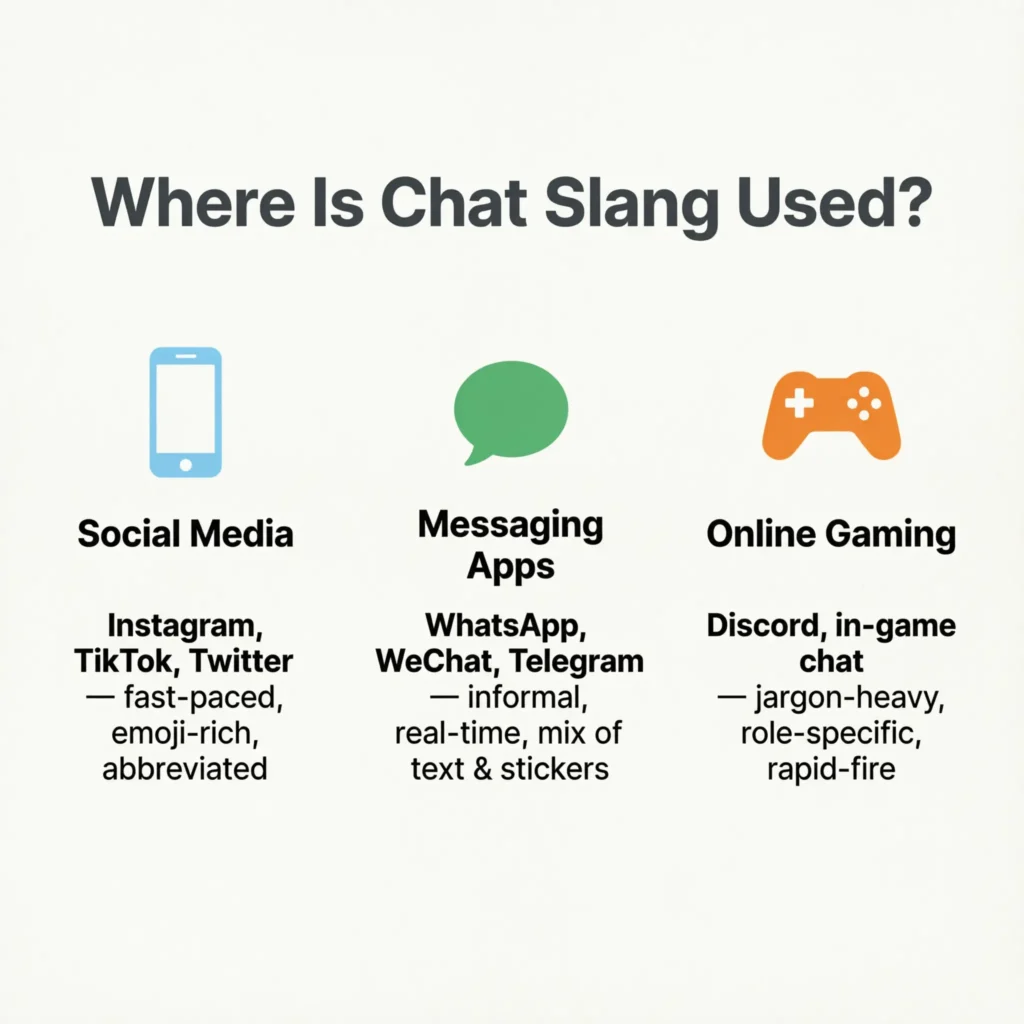
Chat slang appears almost everywhere people communicate online. Some of the most common platforms include:
- Text messaging (SMS & WhatsApp): Everyday conversations between friends and family
- Social media apps: Instagram, Facebook, TikTok, and Snapchat
- Gaming chats: Multiplayer games and Discord servers
- Online forums: Reddit and community discussions
It’s especially popular among teens and young adults, but people of all ages use it now. Even professionals sometimes use light slang in casual workplace chats (like Slack), though it depends on the environment.
Examples of Chat Slang in Conversation
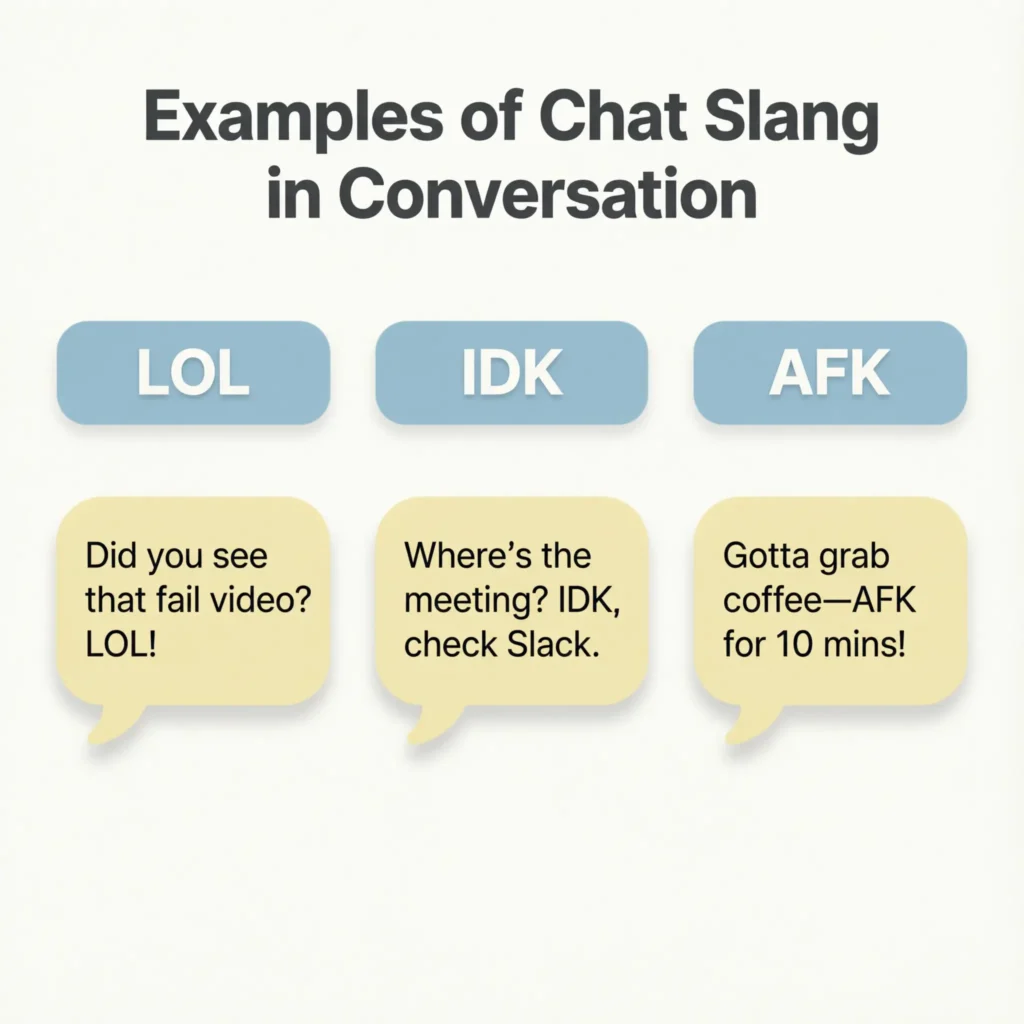
Here are some realistic examples of how chat slang appears in everyday messages:
- Friend: “OMG that movie was amazing 😂”
- You: “IKR! I couldn’t stop laughing lol”
- Friend: “Gotta go now, TTYL!”
- You: “Okay, cya 👋”
- Crush: “Hey, what are you doing?”
- You: “Just chilling, wbu?”
- Friend: “BRB, my mom’s calling me”
- You: “Alright 👍”
- Gamer: “AFK for 5 mins, don’t start yet!”
These examples show how chat slang keeps conversations short, friendly, and natural.
When to Use and When Not To Use Chat Slang
Chat slang is fun and convenient—but it’s not always appropriate.
✅ When to Use It:
- Casual chats with friends
- Social media comments and posts
- Gaming conversations
- Informal group chats
❌ When to Avoid It:
- Professional emails or job applications
- School assignments or formal writing
- Talking to someone unfamiliar with slang
- Serious or sensitive conversations
Using too much slang in formal settings can make you seem unprofessional or unclear. When in doubt, keep it simple and use full words.
Similar Slang Words or Alternatives
Here are some popular chat slang terms related to general texting:
- BRB – Be Right Back
- GTG – Got To Go
- AFK – Away From Keyboard
- IMO – In My Opinion
- FYI – For Your Information
These alternatives help you express different ideas quickly while keeping the conversation flowing.
FAQs
What does chat slang mean from a girl?
It means the same as from anyone else. The tone (friendly, flirty, or casual) depends more on context than gender.
Is chat slang rude?
Not usually. Most chat slang is casual and friendly, but overusing it or using it in the wrong context can seem careless.
Can I use chat slang in professional chats?
Only lightly—and only if the workplace culture allows it. For example, “FYI” is acceptable, but “LOL” might not be.
Does chat slang have any flirty meaning?
Some slang can feel flirty depending on how it’s used. For example, “lol” or “hehe” can soften messages and make them playful.
Is chat slang still popular in 2026?
Yes, absolutely. Chat slang continues to evolve, especially with new trends on social media platforms.
Conclusion
Chat slang is a key part of modern communication, making conversations quicker, more fun, and expressive. Once you understand common abbreviations and how they’re used, it becomes much easier to follow and join online chats. The key is balance—use slang in casual settings, but switch to clear language when needed. With a little practice, you’ll be able to text confidently and keep up with any conversation.