Introduction
Imagine you’re chatting with a friend online or scrolling through a comment section when someone suddenly replies with “OT”. At first, it might leave you confused. Is it a typo? A code? Or just another internet abbreviation everyone else seems to understand except you?
Slang and text abbreviations appear everywhere today—on social media, in gaming chats, and in everyday texting. Terms like LOL, BRB, and DM have become part of digital language, and OT is another abbreviation people use in conversations. But depending on the situation, OT can have different meanings.
In this guide, we’ll explain the OT meaning in slang, where it’s commonly used, how people use it in real conversations, and whether it’s appropriate for different situations.
What Does OT Mean in Text?
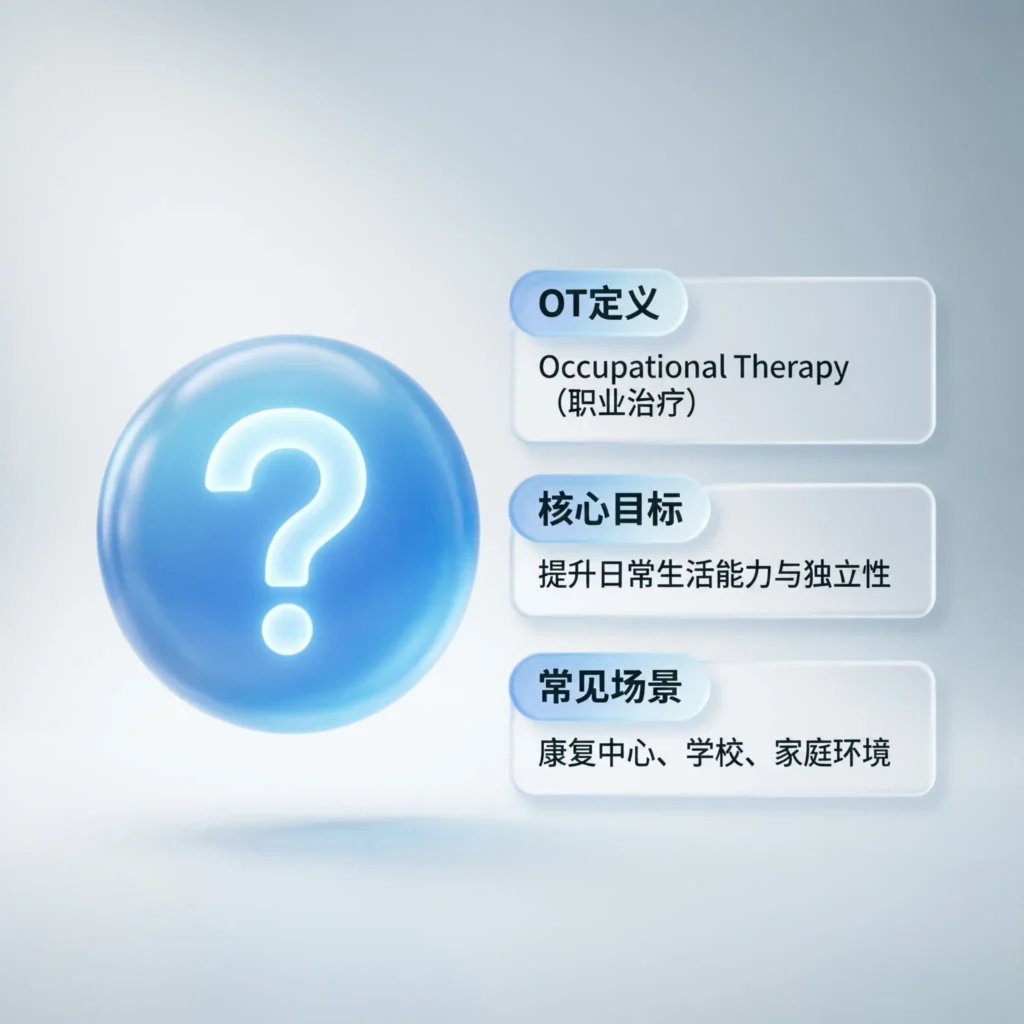
In slang and online conversations, OT most commonly means “Off Topic.”
People use OT when they want to indicate that what they’re about to say isn’t related to the main discussion.
Simple Definition
OT = Off Topic
It’s basically a quick way to say:
- “This isn’t related to the conversation.”
- “I’m changing the subject for a moment.”
- “Random thought incoming.”
Example Meaning
If people are discussing a movie and someone suddenly says:
“OT but have you tried the new pizza place downtown?”
They’re letting everyone know that the comment is not related to the original topic.
Other Possible Meanings of OT
Although Off Topic is the most common slang meaning, OT can also mean different things depending on the context, such as:
- Overtime (common in sports or work conversations)
- Original Tweet (used on Twitter/X discussions)
- Occupational Therapy (used in medical contexts)
However, in casual texting and online forums, “Off Topic” is the most widely understood meaning.
Where Is OT Used?

You’ll usually see OT in casual online environments where people communicate quickly and informally.
1. Text Messages
Friends sometimes use OT when they want to say something unrelated to the main chat.
Example:
“OT but did you watch that new Netflix show?”
2. Social Media Platforms
The slang appears frequently on platforms like:
- Instagram comments
- TikTok discussions
- Twitter/X threads
- Facebook groups
When conversations become long, someone may mark their comment as OT to show they’re switching topics.
3. Online Forums
Forums such as Reddit or gaming communities often use OT when a reply doesn’t directly relate to the original post.
Example:
“OT: Anyone else having internet issues today?”
4. Gaming Chats
Gamers sometimes use OT in group chats to bring up something unrelated to the game.
Example:
“OT but I just got a new gaming keyboard today.”
Who Uses It Most?
While anyone can use it, OT is most common among:
- Teens and young adults
- Gamers
- Social media users
- Online forum communities
Examples of OT in Conversation
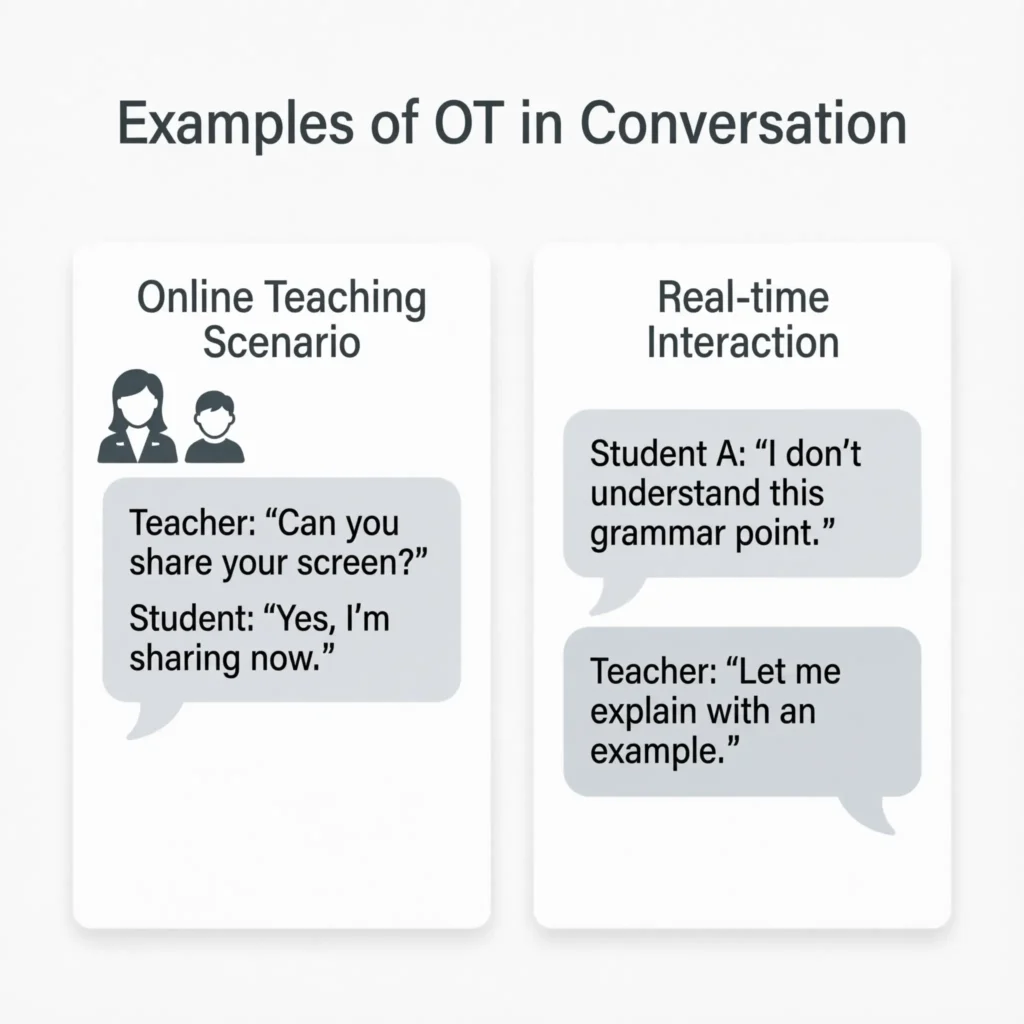
To better understand the OT meaning in slang, let’s look at how it appears in real conversations.
Example 1 (Friendly Chat)
Friend 1: Did you finish the assignment?
Friend 2: Yeah, finally.
Friend 2: OT but are you coming to the party tonight?
Example 2 (Social Media Comment)
User: This movie was amazing!
Commenter: OT but the soundtrack is even better.
Example 3 (Gaming Chat)
Player 1: We need to defend the base.
Player 2: Got it.
Player 2: OT, my internet might lag a bit.
Example 4 (Funny Chat)
Friend: I’m trying to eat healthy this week.
Friend: OT but I just ordered pizza 😂
Example 5 (Group Chat)
Friend 1: Let’s plan the trip.
Friend 2: Sure.
Friend 3: OT but did anyone watch the game yesterday?
Example 6 (Flirty Chat)
Person A: What are you doing tonight?
Person B: Just relaxing.
Person B: OT but you looked really good today.
Example 7 (Online Forum)
User: How do I fix this software error?
Commenter: OT but what version of the software are you using?
When to Use and When Not To Use OT
Like most slang terms, OT works best in casual conversations, but it may not fit every situation.
When It’s Good to Use OT
You can comfortably use OT when:
- Chatting with friends
- Commenting on social media
- Talking in gaming chats
- Participating in online forums
- Messaging in casual group chats
It helps signal that you’re temporarily changing the subject.
When You Should Avoid Using OT
It’s better not to use OT in more formal environments such as:
- Work emails
- Professional meetings
- Academic writing
- Formal messages to teachers or clients
In those cases, it’s clearer to say something like:
- “This might be unrelated, but…”
- “Before we continue, I have another question.”
Using full sentences sounds more professional.
Similar Slang Words or Alternatives
If you understand OT, you might also notice these related slang abbreviations in online conversations.
BTW – By The Way
Used when adding extra information or changing the topic slightly.
Example:
“BTW, did you finish the project?”
BRB – Be Right Back
Used when someone temporarily leaves a conversation.
Example:
“BRB, grabbing some food.”
TMI – Too Much Information
Used when someone shares more detail than necessary.
Example:
“Okay… that’s TMI 😅”
AFK – Away From Keyboard
Common in gaming when someone steps away.
Example:
“AFK for 5 minutes.”
FWIW – For What It’s Worth
Used when sharing an opinion or extra comment.
Example:
“FWIW, I think the first movie was better.”
FAQs
What does OT mean from a girl?
When a girl uses OT, it usually still means “Off Topic.” She’s simply letting you know that what she’s about to say is unrelated to the current conversation.
Is OT slang rude?
No, OT is not rude at all. It’s a neutral and helpful abbreviation used to signal a topic change in casual conversations.
Can I use OT in professional chats?
It’s generally better not to use OT in professional settings. Instead, write something clearer like:
“Before we move on, I have a quick unrelated question.”
Does OT have a flirty meaning?
Not directly. However, someone might use OT to introduce a flirty comment.
Example:
“OT but you looked really cute today.”
In this case, the flirting comes from the message itself, not the abbreviation.
Is OT still popular in 2026?
Yes, OT is still used in 2026, especially in online communities, gaming chats, and social media discussions. While newer slang terms appear frequently, OT remains a simple and widely understood abbreviation.
Conclusion
The OT meaning in slang is simple: it usually stands for “Off Topic.” People use it to show that their comment isn’t directly related to the current conversation.
You’ll often see OT in text messages, social media comments, gaming chats, and online forums. It’s a casual abbreviation that helps conversations flow smoothly when someone wants to briefly switch subjects.
Just remember that OT is best used in informal settings with friends or online communities. In professional or formal conversations, it’s better to use full sentences instead.
Now that you know what OT means, you can confidently understand—and even use—it the next time you see it in a chat.